


A History Of Urban America
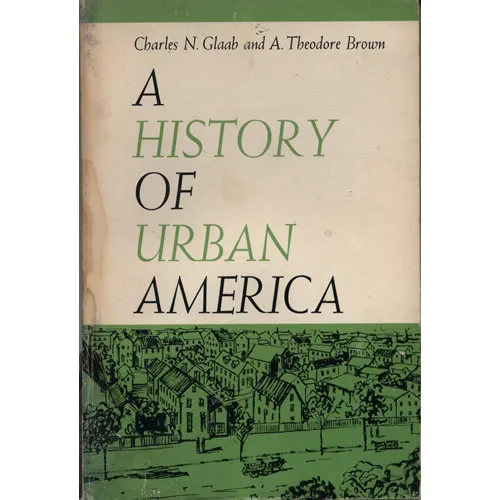
Publisher: MacMillan
Format: Paperback
ISBN: none
Welcome, dear reader, to a time capsule from the distant past—1967, to be exact—where bell-bottoms were all the rage and the air was thick with the smell of optimism. “A History of Urban America” by Charles N Glaab and A Theodore Brown serves as a delightful reminder that urban life was once thought to be a series of triumphs, tribulations, and a surprising number of hot dog stands. If you’ve ever wondered how concrete jungles emerged where once there were only verdant pastures, then prepare to be mildly entertained by this scholarly endeavor that was clearly written before the internet made everyone a self-proclaimed expert on everything.
Unfurling like a particularly dense map of tangled streets, this tome promises to take you on an enlightening journey through the grand cities of America—those beacons of culture, capitalism, and chaos. Glaab and Brown, perhaps in a fit of caffeinated enthusiasm, have compiled insights that range from the riveting to the downright baffling. From the founding fathers to the founding fast-food joints, this book is your guide to understanding how urban America became a labyrinthine wonderland where taxis and dreams collide.
Each chapter is an invitation to ponder such pressing questions as: How did we go from horse-drawn carriages to the gridlock of modern-day rush hour? What’s the difference between urban sprawl and a well-timed nap during a boring lecture? And just how many pigeons can fit on a park bench? The authors delve deep into the roots of urbanization, offering a scholarly perspective that is somehow both enlightening and vaguely reminiscent of listening to your uncle drone on about his glory days in the big city.
As you flip through its pages, you’ll encounter a plethora of anecdotes that are both amusing and thoroughly perplexing. The authors take you on a whimsical ride through the evolution of metropolitan spaces, detailing everything from the birth of skyscrapers to the mysterious rise of coffee houses that serve overpriced lattes to existentialists and artists alike. Yes, there’s a chapter on coffee culture, and no, it doesn’t include a single mention of oat milk—because, obviously, it hadn’t been invented yet.
Glaab and Brown also manage to touch upon social movements that helped shape urban landscapes, though they do so with all the grace of a toddler learning to ride a bicycle. Expect a few wobbles and some rather large questions left unanswered. You might find yourself pondering why urban planners in the 1960s thought it was a good idea to use concrete for absolutely everything. Clearly, they hadn’t yet come to appreciate the beauty of green spaces—or the joy of a well-placed park bench under a shady tree.
Now, let’s be honest—this book doesn’t have the glitzy cover of a modern bestseller. In fact, it looks like it might have been used as a doorstop in a particularly drafty professor’s office. But that’s part of its charm! Each crease and coffee stain tells a story of its previous life, perhaps spent at a library where no one quite understood what “urban” meant, or tucked in the back of a dusty car on a road trip to nowhere.
Condition: This is a used book, and it does show signs of its journey through time, including a couple of dog-eared pages, mysterious yellowing, and the faint smell of something that might have been lunch once. Rest assured, though, it’s all part of the experience. Think of it as urban history in physical form, complete with character! You’re not just buying a book; you’re adopting a piece of history with all its quirks and eccentricities.
- Absorbing anecdotes that will make you question your life choices after a late-night read.
- Historical insights that may or may not be relevant today—because who doesn’t love a good "what if?"
- Explanations of urban geography that could double as a sleep aid.
- Charming illustrations that look suspiciously like they were drawn by a very dedicated, very bored intern.
- References to bygone eras that will have you wondering if you should invest in bell-bottoms.
So if you’re in the mood to navigate the back alleys of urban history—complete with all the detours and dead ends—pick up “A History of Urban America.” It may not be a bestseller, but it’s certainly a conversation starter, especially when you want to impress your friends with your newfound knowledge that, yes, urban America has a complex past, and no, they can’t all be reduced to the latest trend in artisanal donuts. This delightful relic is available at Crappy Old Books, where the ‘crappy’ is more of a charming quirk than a drawback. Grab a copy before it, too, becomes a relic of the past!
Contents includes:
- The Colonial Matrix
- Cities in the New Nation
- The City in American Thought 1790-1850
- The Urban Milieu
- The Completion of the Urban Network 1860-1910
- Transformation and Complexity: The Changing City 1860-1910
- The Web of Government
- Bosses and Reformers
- The Urban Community Examined
- The Emergence of Metropolis
- Suggestions for Further Reading
This book is water damaged as I left it in a book case in my chimney that leaked. I thought I had fixed the leake, so its a bit rotton on the bottom spine but the spine is still good and its perfectly readable.
Keep browsing: See more History books Other books by Charles N Glaab & A Theodore Brown
